Adinath Poly Plast Private Limited — Manufacturer of V-LITE® Polycarbonate Sheets & Building Products
Home » Products » Polycarbonate Sheets » V-LITE® Raindrop Sheet
Polycarbonate Sheets

V-LITE® Polycarbonate Raindrop Sheet

A textured polycarbonate sheet with an organic Raindrop finish. Available in 2–6 mm thicknesses, four colours and 1220 mm width, with cut length and UV grade confirmed to your order.

V-LITE® Raindrop Sheet
2 mm – 6 mmThickness
4 optionsColours
1220 mmSheet width
VL-PC-RDProduct code

A textured architectural surface

Polycarbonate Raindrop Sheet: character in the finish.

V-LITE® Polycarbonate Raindrop Sheet is a textured polycarbonate sheet with an irregular, rounded surface appearance. It is considered for construction and decorative applications where the panel should contribute more visual interest than a smooth, clear face.

What makes the Raindrop finish different?

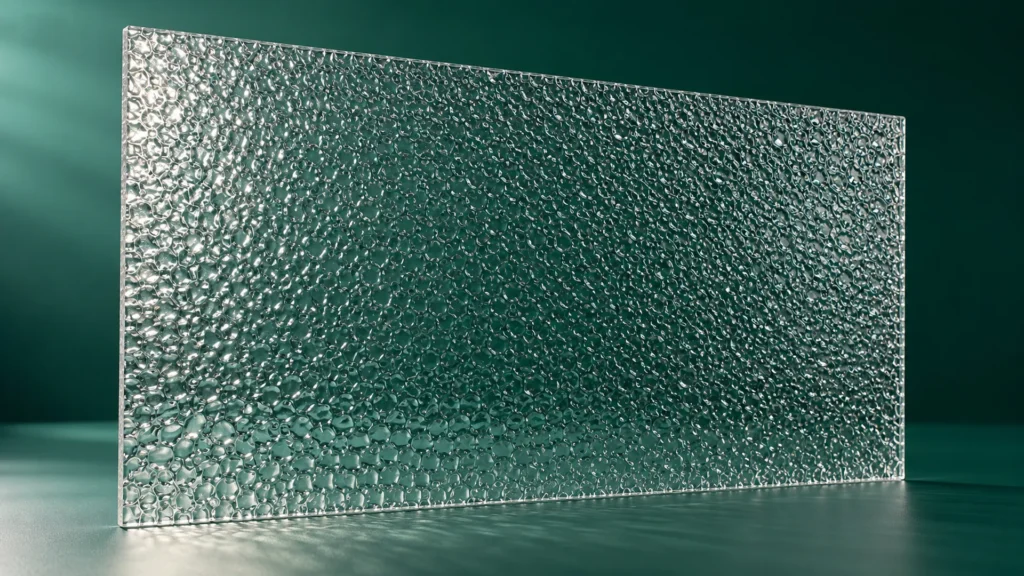
The name describes the appearance of the surface. Its small, uneven details create a softer, less regular pattern than a geometric diamond or prism finish. Highlights change as you move past the sheet, giving a glazed element a textured presence even when the surrounding frame is simple.

Raindrop is a finish, not a promise about rain. It does not establish that the material repels water, cleans itself or makes a finished roof waterproof. Those are separate matters involving the selected grade and the complete installation. Choose this product first for the appearance you want, then confirm the technical requirements of the application.

Adinath Poly Plast Pvt. Ltd. manufactures the V-LITE range in Indore, Madhya Pradesh. Raindrop Sheet is identified by product code VL-PC-RD. Keep that code on enquiries and drawings so the texture is not confused with another sheet in the range.

Choose the surface and the specification together.

A textured face changes how reflections and the view through a panel are perceived. It may soften visual detail, but the effect depends on colour, thickness, illumination and viewing distance. It should not be treated as a guaranteed privacy screen or as a measured glare-control product without the relevant evidence.

Try a physical sample where it will be used. View it from both sides, with the background lit and unlit, and at the distance occupants will normally stand. A finish that seems private in a showroom can look different when a room behind it is brightly illuminated at night.

For every project, separate three decisions: the appearance of the surface, the grade needed for the exposure, and the support system. A good-looking sample answers the first question. Product documentation and project design answer the other two.

Organic surface character

A rounded, irregular texture gives decorative elements an appearance distinct from a smooth sheet.

Four published colours

Clear, Bronze, Green and Milky can be assessed alongside the surrounding finishes.

A practical supply brief

Choose from the published thicknesses and confirm cut length, support arrangement and handling.

Specified UV options

Record one-side or two-side protection and identify the protected face before installation.

Explore the finish

A close look at the Raindrop texture.

The finish has an organic, irregular appearance rather than a repeated angular tile. The visual below brings the surface into focus so its texture can be understood independently of an installed application.

Texture scale and surface appearance should be confirmed against the actual grade and sample. The visuals illustrate design ideas; they are not records of completed customer projects or evidence of tested performance.

Inspect more than the front face.

Before fabrication, ask for the supplied sheet construction, the textured-face orientation and the edge-finishing instructions. A close-up of the face cannot establish the internal build-up or fixing detail. An approved sample or product drawing is the right reference for an edge or thickness assessment.

We have kept the visual guide focused on the surface rather than inventing an unverified cutaway. If edge engagement, framed retention or a particular thickness tolerance is important to your design, include it in the enquiry.

Raindrop surface detail. Confirm the exact finish with a physical sample.

A useful sample check

  1. Change the lighting

    Compare daylight and artificial light, with the background illuminated and unlit.

  2. Change the viewing distance

    Look from both sides and from the position people will normally use the space.

  3. Confirm the actual grade

    Match the sample to the quotation, UV option and product documentation.

An inspection guide, not a measured light-transmission or privacy rating.

Four finishes. One Raindrop surface.

Choose from the colours in the product record. Your selection carries into the enquiry form, so the requested finish stays consistent from browsing to quotation.

Select a finish
Selected finish: Clear

Product VL-PC-RD · 1220 mm width · 2 mm, 3 mm, 4 mm, 5 mm, 6 mm

Use this selection in an enquiry →

Screen colours are indicative. Confirm colour and texture with a physical sample.

Clear for the least tinted appearance.

Clear is the starting point when you want to assess the texture without a strong colour influence. It should still be judged as a textured material rather than as a substitute for an unobstructed window. Compare it against your frame and the objects behind the panel.

Bronze, Green and Milky for a different visual setting.

These finishes let the panel relate to the surrounding architecture in different ways. Make the choice using a sample alongside the actual finishes. The swatches indicate colour only; they do not publish light-transmission percentages, heat-reduction values or privacy ratings.

Product information

Raindrop Sheet specifications.

Use the published options below to prepare the enquiry. Confirm the exact grade, practical length limits and order conditions before production.

ProductV-LITE® Polycarbonate Raindrop Sheet
Product codeVL-PC-RD
MaterialPolycarbonate
SurfaceIrregular Raindrop texture
Thickness2 mm, 3 mm, 4 mm, 5 mm, 6 mm
Width1220 mm
LengthCut to length; practical limits to confirm
ColoursBronze, Clear, Green, Milky
UV optionsOne or both sides, as specified for the supplied grade
PackagingPE protective film on both faces; dispatch protection to confirm
ManufacturerAdinath Poly Plast Pvt. Ltd., Indore, Madhya Pradesh

Raindrop Sheet application ideas.

Start with the purpose of the panel. The six concepts below show where a textured finish may be considered, together with the question to resolve before specifying it.

Interior partitions design concept.

Interior partitions

Share light between spaces while introducing a textured visual layer. Raindrop may be considered where a clear view is unnecessary. Check screening with a physical sample in both daytime and evening lighting, and agree the framing, edge retention and cleaning access before ordering.

Decorative glazing design concept.

Decorative glazing

Use a textured panel as part of a cafe, reception or internal feature opening. The finish becomes part of the interior palette. Confirm the location-specific glazing requirements, panel construction and frame compatibility; a decorative appearance does not establish safety-glazing approval.

Entrance canopies design concept.

Entrance canopies

A small canopy can combine shelter with a textured overhead appearance. Confirm that the selected grade suits exterior exposure. The project needs a coordinated thickness, support system, movement allowance, water-management detail and connection to the building before the sheet is specified.

Covered walkways design concept.

Covered walkways

A repeating roof-panel arrangement can give a sheltered route a consistent material character. Keep texture orientation, panel sizes and joint layout coordinated across the run. Confirm weather exposure, support spacing, drainage and how the roof will be reached for maintenance.

Selected rooflights design concept.

Selected rooflights

A textured rooflight may be considered where the visual character of incoming daylight matters. It requires particular attention to overhead application requirements, panel retention and the complete roof interface. Confirm grade suitability and project requirements rather than assuming any textured panel is a rooflight system.

Architectural feature panels design concept.

Architectural feature panels

A framed or backlit feature panel brings the texture into a deliberate interior composition. Evaluate the sample against the proposed light source and surrounding finishes. Check temperature, fire requirements, colour consistency, access for cleaning and the fixing method before developing the detail.

Application visuals are illustrative design concepts. Final suitability depends on the supplied grade, the applicable requirements and the approved supporting system.

Choose by appearance and use

Raindrop, Embossed, Diamond or Smooth?

There is no universally best finish. Compare the surface character you want and the level of view-through the space needs, then review samples and the relevant product data.

FinishSurface characterSelection consideration
RaindropOrganic, irregular rounded textureCompare the actual surface scale, tint and screening in the intended lighting.
EmbossedA textured face with its own pattern and scaleInspect a sample; the name alone does not define an optical or privacy value.
DiamondA visibly geometric decorative patternConsider how strongly the repeating geometry should appear in the finished space.
Smooth SolidA smooth face without the decorative Raindrop textureConsider where the design calls for a smoother reflection or clearer view-through; verify the selected grade.

Use the surrounding space as the reference.

A quieter texture may suit a background panel, while a more visibly geometric surface may be appropriate for a feature. Place the sample beside the intended frame, wall colour and lighting. Looking at an isolated swatch cannot show how a full installation will feel.

Keep appearance separate from performance.

These are qualitative design comparisons. They are not rankings for strength, fire performance, insulation or light transmission. If the brief needs a specific figure, compare the tested grades and assemblies rather than selecting a finish by its name.

Select it carefully. Install it as a system.

A finished panel depends on its frame, supports, accessories and installation as well as the sheet. Resolve the interfaces before material is cut.

  1. Define the setting

    Application, location, exposure and the appearance you want.

  2. Coordinate the panel

    Thickness, width, length, supports and quantity.

  3. Check the grade

    Construction, UV option and applicable documentation.

  4. Approve the detail

    Fixing, movement, compatible accessories and maintenance.

Thickness and panel dimensions

Share the intended application, location, support arrangement and approximate panel dimensions. If thickness has not been decided, describe the span and loading requirements instead of guessing. Confirm sheet orientation and any pattern alignment before cutting multiple panels.

The published width is 1220 mm and length is cut to requirement, subject to practical production and transport limits. A very long panel may create handling and delivery constraints even where the structure itself has enough room. Agree the supply format before ordering.

UV orientation and thermal movement

Identify the protected face or faces from the supplied marking and instructions. For an exterior installation, the specified protected face must be oriented correctly. Confirm how this is indicated on the delivered material before protective packaging is removed.

Polycarbonate changes dimensions with temperature. Follow the approved system instructions for movement allowance, fixings and engagement. Do not borrow drilling, spacing or bending figures from another product, and do not restrain the sheet simply because a tight fixing appears easier to install.

Compatible accessories and water management

Coordinate profiles, gaskets, fasteners and sealants with the selected sheet. Compatibility matters at every contact surface. Ask the supplier to confirm the proposed materials rather than using an unidentified sealant or cleaning chemical because it is already available on site.

For outdoor work, review the complete route water takes: across the panel, through the joint arrangement and away from the building. A textured sheet is not a complete waterproofing system. Slopes, closures, transitions and drainage need their own coordinated details.

Handling, storage and cleaning

Use the supplied handling instructions, protect faces from grit and avoid dragging one panel across another. Confirm storage conditions and the appropriate timing for protective-film removal. Check the masking and material identification before fabrication so the intended finish and UV orientation remain clear.

For routine cleaning, use a soft, non-abrasive method approved for the grade. Confirm the cleaner before applying it across the face, especially if coatings or sealants are present. Avoid scraping the texture or using an unapproved solvent. Make external panels accessible for safe inspection and cleaning.

From sample selection to site delivery.

A useful quotation makes the product, supply format and delivery responsibilities clear. Keep those details together in the written order confirmation.

Packaging and inspection

The existing page lists PE protective film on both faces. Confirm the packaging arrangement for your dimensions, quantity and transport method, including any additional protection needed at edges or beneath straps. Protective film is part of handling protection, not a substitute for careful unloading.

When material arrives, check the order reference, finish, dimensions and packaging condition before installation. If something is damaged or appears inconsistent with the confirmation, retain photographs and contact the sales desk promptly. Ask what inspection documents or batch information can accompany your particular order.

Freight and unloading

Freight depends on the destination, quantity, sheet dimensions and vehicle arrangement. Tell the supplier about restricted access or any unloading limitations. Agree who arranges transport and unloading so the material is not left exposed while equipment is organised.

Production, dispatch and transit

These are separate stages. Request the production lead time for the selected thickness and colour, the expected dispatch date and the destination-dependent transit estimate. A standard website timetable cannot account for every quantity, grade or delivery location.

Stock availability, minimum order quantity and practical cut lengths should be confirmed with the enquiry. Do not schedule installation solely around an unconfirmed estimate. Share the required site date so the sales team can explain what is feasible.

Commercial terms and support

Price, taxes, payment terms, warranty scope and any inspection arrangement belong in the written quotation. A Polycarbonate Raindrop Sheet price is meaningful only when the grade, dimensions, quantity and supply scope are defined. Compare quotations on that common basis.

For after-sales support, keep the quotation, order reference, batch information where supplied, and clear photographs. This gives the team the information needed to understand a query without guessing at the material or installation.

Questions before you specify Raindrop Sheet.

Direct answers to the product and ordering questions buyers ask most often.

What is a Polycarbonate Raindrop Sheet?

It is a polycarbonate sheet with a textured Raindrop appearance. The finish is used to introduce surface character into construction and decorative applications. V-LITE identifies it as VL-PC-RD. Choose the finish alongside the appropriate grade, dimensions and supporting system rather than treating the texture as a complete specification.

Is the raindrop appearance a surface texture?

Yes. Raindrop describes the textured appearance of the face. It does not mean there is water on the sheet and does not establish a water-repellent coating, self-cleaning behaviour or a waterproof roof. For outdoor work, weather-tightness depends on the complete installation, including the joints and surrounding building details.

How does it differ from Embossed and Diamond Sheet?

The main design distinction is the surface pattern. Raindrop has an irregular, organic appearance, while Diamond presents a geometric pattern and Embossed has its own textured finish. Compare physical samples at the same viewing distance. Product-specific performance needs the respective grade data and cannot be ranked by finish name.

Which thicknesses are available?

The product record lists 2 mm, 3 mm, 4 mm, 5 mm, 6 mm. The appropriate choice depends on the panel dimensions, supports, exposure and loading requirements. If those have not been finalised, send the project information and request guidance. Availability, practical tolerances and the supplied grade should be confirmed with the quotation.

Which colours and dimensions can I order?

The published colours are Bronze, Clear, Green, Milky. Width is 1220 mm and supply is cut to length, subject to practical production and transport limits. State the required dimensions and quantity rather than assuming a standard length. Confirm the chosen finish using a physical sample before a large order.

Does Raindrop Sheet provide complete privacy?

Complete privacy is not promised. The appearance of objects behind a textured panel varies with tint, thickness, lighting and distance. Test a sample with the background illuminated, especially if night-time privacy matters. A decorative screening effect should not be substituted for a defined privacy requirement without checking the real conditions.

What UV protection options are available?

The published product description offers UV protection on one or both sides. Confirm the option supplied for your order and how the protected face or faces are identified. Follow the grade-specific orientation instructions. The availability of a UV option does not by itself establish suitability for every exterior application.

Can Raindrop Sheet be used outdoors?

Consider it only after confirming that the quoted grade and installation system suit the intended exposure. A sheltered entrance and an exposed roof do not have identical requirements. Check UV specification, supports, water management, movement and applicable project requirements with the supplier and project designer before ordering.

Is it suitable for canopies or partitions?

These are application categories in which a textured finish may be considered. A partition needs an appropriate frame, access and screening assessment; a canopy also needs exterior suitability, drainage and structural coordination. Review the actual application and supplied grade. Neither suitability nor an approved fixing detail follows from the product name alone.

How should I clean the textured surface?

Follow the cleaning instructions for the supplied grade. Use an approved soft, non-abrasive method and confirm the cleaning product before applying it broadly. Avoid scraping the texture or introducing unapproved solvents. Plan safe access for external panels, and check compatibility with any coatings, sealants and adjoining materials.

What affects Polycarbonate Raindrop Sheet price?

Thickness, selected grade, colour, dimensions, quantity, packaging and delivery scope influence the quotation. Compare prices using the same specification and supply responsibilities. Confirm taxes, freight, payment terms and any warranty conditions in writing. No universal price or standing delivery promise is published here because orders vary.

What information is required for a quotation?

Send your name and contact details, delivery location, application, preferred colour, thickness if known, dimensions and quantity. Include the supporting arrangement, exposure and required timing. If the specification is undecided, describe the project rather than filling in assumed values. This gives the sales team a useful basis for a qualified response.
Discuss your requirement

Request a Raindrop Sheet quote.

Tell us what the panel needs to do. Your selected finish is carried into the form. If thickness is undecided, choose “To be advised” and share the supporting structure and exposure.

Your enquiry is sent to the V-LITE sales desk. Grade, UV specification, practical lengths, price and delivery arrangements are confirmed in the written quotation.

The manufacturer

Made at our own plant in Indore.

V-LITE® is manufactured by Adinath Poly Plast Pvt. Ltd. — extrusion, cutting, masking, testing and packing all under one roof, with batch traceability on every dispatch.

2009
Manufacturing since
0.8–20 mm
Thickness range
ISO ×3
9001 / 14001 / 45001
ZED Gold
MSME, Govt. of India
Scroll to Top
Chat on WhatsApp