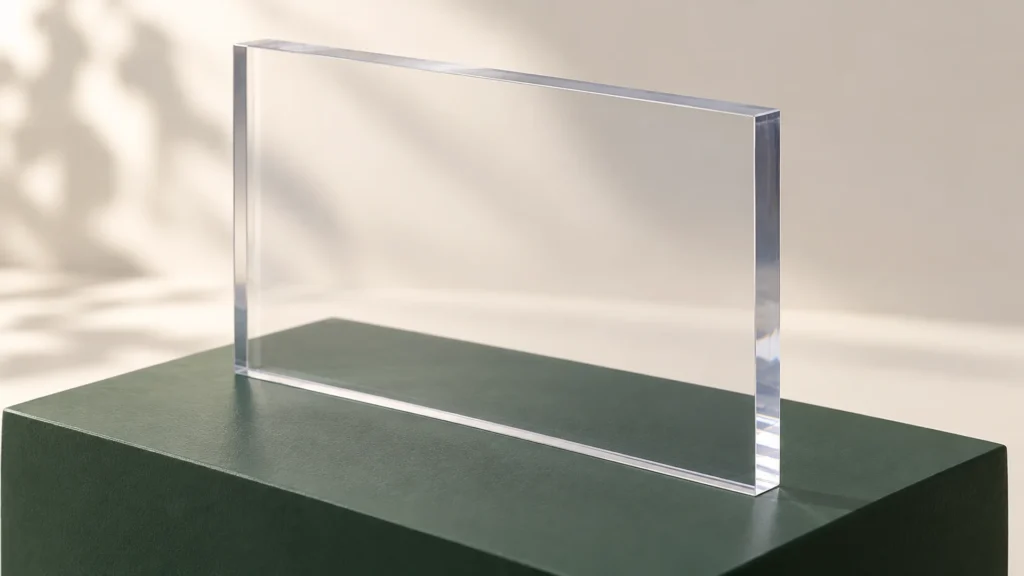
What is a Polycarbonate Solid Compact Sheet?
It is a dense polycarbonate sheet with smooth faces and no internal multiwall channels. V-LITE lists it as VL-PC-SC. Select the actual grade, dimensions and supporting system for the application rather than treating the material name as a complete technical specification.
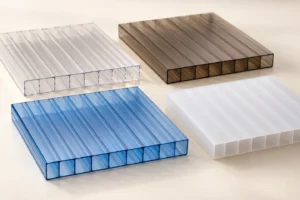
How does it differ from multiwall sheet?
Solid compact sheet has a dense section; multiwall sheet has internal walls and channels. The difference affects construction and the information needed for fabrication and installation. Compare the particular grades and assemblies for optical, thermal or structural requirements instead of assigning a universal performance ranking.
Is it the same as acrylic?
No. Polycarbonate and acrylic are different materials with their own grades, fabrication instructions and surface-care requirements. A similar clear appearance does not make them interchangeable. Confirm the material named on the quotation and evaluate the actual product against the project's requirements.
Which thicknesses are available?
The product record lists 2 mm, 3 mm, 4 mm, 5 mm, 6 mm, 8 mm, 10 mm, 12 mm. Confirm availability with the selected width, colour and UV grade. Thickness selection depends on panel dimensions, supports, loading and applicable requirements, so include the structure in the enquiry if the specification is not final.
Which widths, lengths and colours can be supplied?
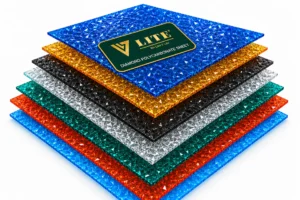
Published widths are 1220 mm, 2100 mm, with cut-to-length supply. Colours are Bronze, Clear, Dark Blue, Green, Lake Blue, Metallic Grey, Milky. Confirm the combination, practical maximum length, quantity and transport arrangements before ordering; the list does not establish availability of every combination.
Are all colours transparent?
No single transparency level is stated for the range. Clear, tinted and milky appearances should be assessed separately using samples of the proposed grade and thickness. Screen swatches are illustrative and do not establish privacy, light-transmission percentages or heat-reduction values.
Which UV-protection options are available?
The existing product description offers protection on one or both faces. Confirm the option supplied, protected-face identification and orientation instructions in the written specification. UV protection does not by itself establish a warranty period or approval for every exterior application.
Can it be used outdoors and for roofing?
Consider it after confirming the grade and complete installation for the intended exposure. Roofing also needs reviewed loading, supports, panel retention, movement, joints and drainage. Request the relevant product documentation and project-specific details rather than relying on a roof concept image.
Is it suitable for partitions or protective glazing?
Partitions are an application category to evaluate with an appropriate grade and frame. Protective, security or safety-critical glazing requires explicit performance and compliance evidence for the material and system. Ordinary solid sheet is not presented here as bulletproof or certified safety glazing.
Can it be cut, drilled or formed?
Fabrication must follow instructions for the supplied grade. Ask for guidance on the proposed tools, cutting, drilling, edges and forming process before work starts. This page does not prescribe drilling allowances or bend radii that have not been verified for the actual product.
How should it be cleaned?
Use the supplier's approved gentle, non-abrasive method and compatible cleaning products. Avoid scraping and unapproved solvents. Confirm the process where coatings, sealants or adjoining materials are present. Plan safe access and do not assume roof sheets can be walked on for cleaning.
What is needed for price and delivery estimates?
Send the delivery location, application, thickness if known, colour, UV requirement, width, length and quantity with units. Include the support arrangement and required date. Ask for production, dispatch, transit, packaging, freight and commercial terms to be confirmed against that specification.